
PPIE Strategy (2026 - 2027)
Introduction
This strategy details our ambition, aim, principles and goals for patient and public involvement and engagement at the NIHR King’s Clinical Research Facility for the next year.
This 2026 PPIE strategy has been shaped by feedback from our PPIE members and CRF staff, gathered through a strategy refresh survey in summer 2025.
It builds on the outcomes of our 2023–2025 PPIE Strategy, reflecting on what has been achieved, identifying areas for improvement, and setting new priorities for the year ahead. The updated actions in this plan reflect our shared commitment to meaningful involvement in research.
Based on feedback about accessibility, this strategy is also available in summarised and easy read formats.
This strategy was written by CRF staff Elka Giemza, and our PPI Lead with review and improvements by our PPIE advisory group members Al, Clara, and Carrol.
Acronyms
We have tried to minimise acronyms in this strategy. The ones we have used can be found below:
BRC: Biomedical Research Centre
CRF: Clinical Research Facility
EDI: Equality, Diversity, and Inclusion
KCH: King’s College Hospital
KCL: King’s College London
NIHR: National Institute for Health and Care Research
PPI/E: Patient and Public Involvement/Engagement
SLaM: South London and Maudsley NHS Foundation Trust
Definitions
Key definitions from the National Institute for Health and Care Research (NIHR) are listed:
Clinical Research Facility: purpose-built facilities in NHS hospitals where researchers can deliver studies. These studies may be in an early phase (when a researcher is looking at whether something is safe or effective).
Clinical Trial: an experiment to compare the effects of two or more medicines, treatments, or procedures. ‘Clinical trial’ is an umbrella term for a variety of different experiments using different methods.
Engagement: where information and knowledge about research is provided and disseminated to the general public, for example via science festivals, open days, and media coverage.
Impact: the changes, benefits, and learning gained from the insights and experiences of patients, carers, and the public when working in partnership with researchers and others.
Involvement: an active partnership between public members and researchers in the research process, rather than the use of people as “subjects” or “participants” of research. It is often defined as doing research “with” or “by” members of the public rather than “to”, “about” or “for them”.
Participation: the act of taking part in a research study, for example, being recruited to take part in a clinical trial.
At the NIHR King’s Clinical Research Facility our participants may be local (from the south east London area) or may travel from further away (from across the country or abroad).
Public members: include patients, potential patients, carers, and people who use health and social care services as well as people from organisations that represent people who use services.
Research: discovering new knowledge that could lead to changes in treatments, policies, or care.
The NIHR King’s Clinical Research Facility
The NIHR King’s Clinical Research Facility is designed to support clinical trials on a broad range of topics including mental health and general medicine. These clinical trials may be sponsored by pharmaceutical companies (known as commercial trials) or sponsored by the NHS, Research Councils or Charities (known as non-commercial trials).
The NIHR King’s Clinical Research Facility is made up of four research areas listed below. They are all based physically in King’s College Hospital acting in partnership with South London and Maudsley NHS Foundation Trust and King’s College Hospital.
- The Experimental Medicine Facility: this contains rooms set up with clinical equipment, such as the equipment needed to take blood or to give medication, and specialised rooms where volunteers and patients with particular conditions taking part in clinical trials can be interviewed.
- The Cell Therapy Unit: where human-cell and gene-based therapies can be produced.
- The Clinical Trials Facility: this contains ward beds and rooms where volunteers and patients with particular conditions taking part in clinical trials can be examined.
- The Imaging Facility: this contains a 3T magnetic resonance imaging scanner.
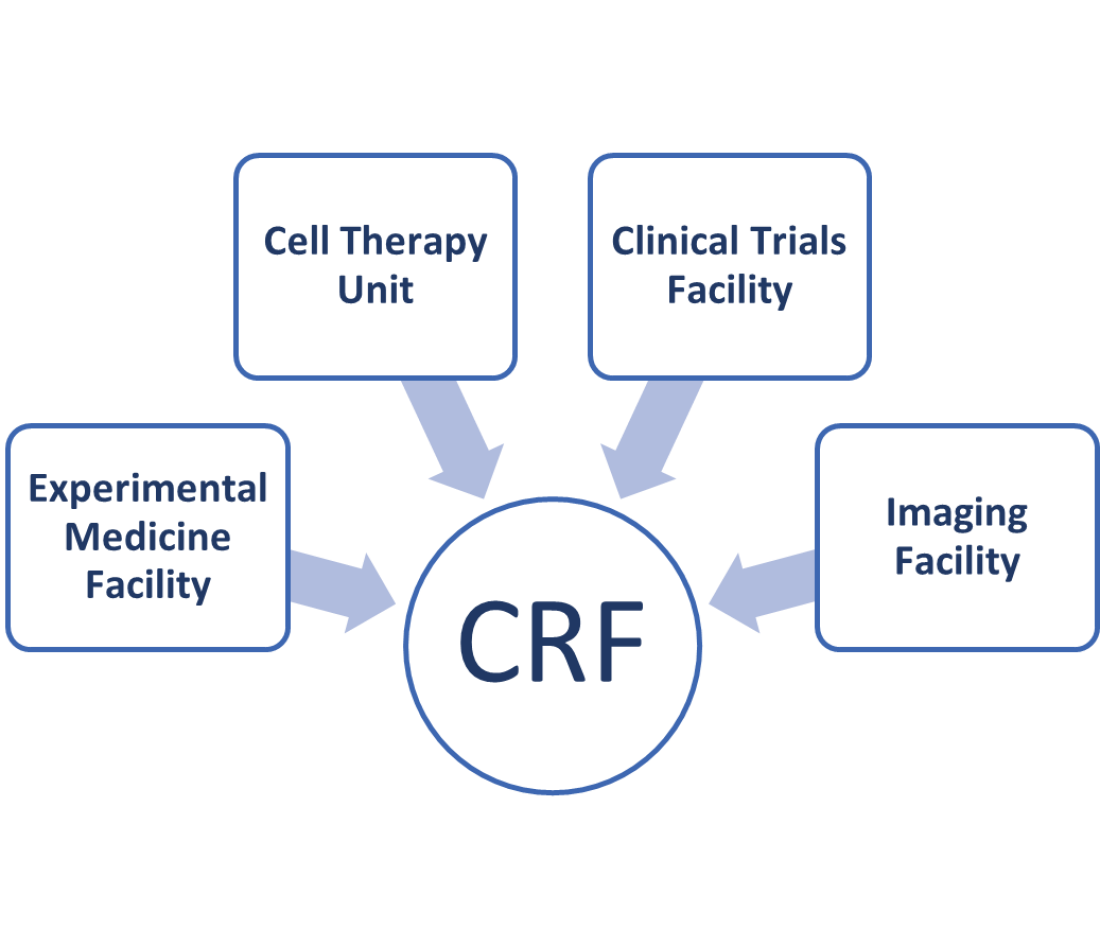
Research areas within the NIHR King’s Clinical Research Facility
The NIHR King’s Clinical Research Facility has clinical research and support staff to help research teams with their studies. Research teams from across the hospital undertaking commercial or non-commercial trials must apply to use the CRF and to work with our staff.
The wider NIHR King’s Clinical Research Facility Strategy outlines our aim to provide an excellent facility for the efficient and safe conduct of clinical trials. We hope these clinical trials will lead to developments that transform the lives of patients. We believe this aim can only be achieved by working alongside public members who have:
- Experience of what it is like to be part of a clinical trial
- Experience of living with/or caring for someone living with a certain health condition
- An interest in clinical trials, and the health conditions frequently studied at the NIHR King’s Clinical Research Facility
Our partners and collaborators
We receive support from many places. Our partners and collaborators have influenced this Patient and Public Involvement and Engagement Strategy as follows:
- King’s Health Partners: we receive academic support from King’s Health Partners. King’s Health Partners is a collaboration between hospitals and universities in the Southeast London area. A guiding principle for King’s Health Partners is to put members of the public first by ensuring they are at the heart of everything. This Public Involvement and Engagement Strategy supports King’s Health Partners’ ethos.
- King’s College Hospital NHS Foundation Trust: we are based in King’s College Hospital, and therefore we align ourselves with the Trust strategy, which is to be BOLD – consisting of Brilliant people, Delivering Outstanding care, Developing Leaders in research and education and with Diversity, Equality, and Inclusion at the centre of it all. Representatives from the King’s College Hospital Patient Experience and Engagement Team have provided us with PPIE support and guidance.
- King’s College London: we are academically based in King’s College London. We plan to collaborate with already established PPIE teams such as the King’s College London Impact and Engagement Services Team and the King’s College London PPI Lead for the Centre of Rheumatic Diseases.
- South London and Maudsley (SLaM) and its Biomedical Research Centre (BRC): We have significant interactions with SLaM and its BRC. The SLaM Service User Advisory Group have, and will continue to, provide us with PPIE support and guidance.
- NIHR: we receive funding from the NIHR. We are also supported by the NIHR’s PPIE infrastructure, available resources, and guidance. The NIHR Applied Research Collaboration (ARC) South London hosts events and provides training and support in PPIE.
To note: We also received funding from the Wellcome Trust when we were first established.
- Public members: our PPIE group and wider public member network are key partners, working with us through a co-production approach. As more public members join us, their local community contacts and networks will be invaluable in helping us to build a diverse group. We want the group to be reflective of the South London population we serve.
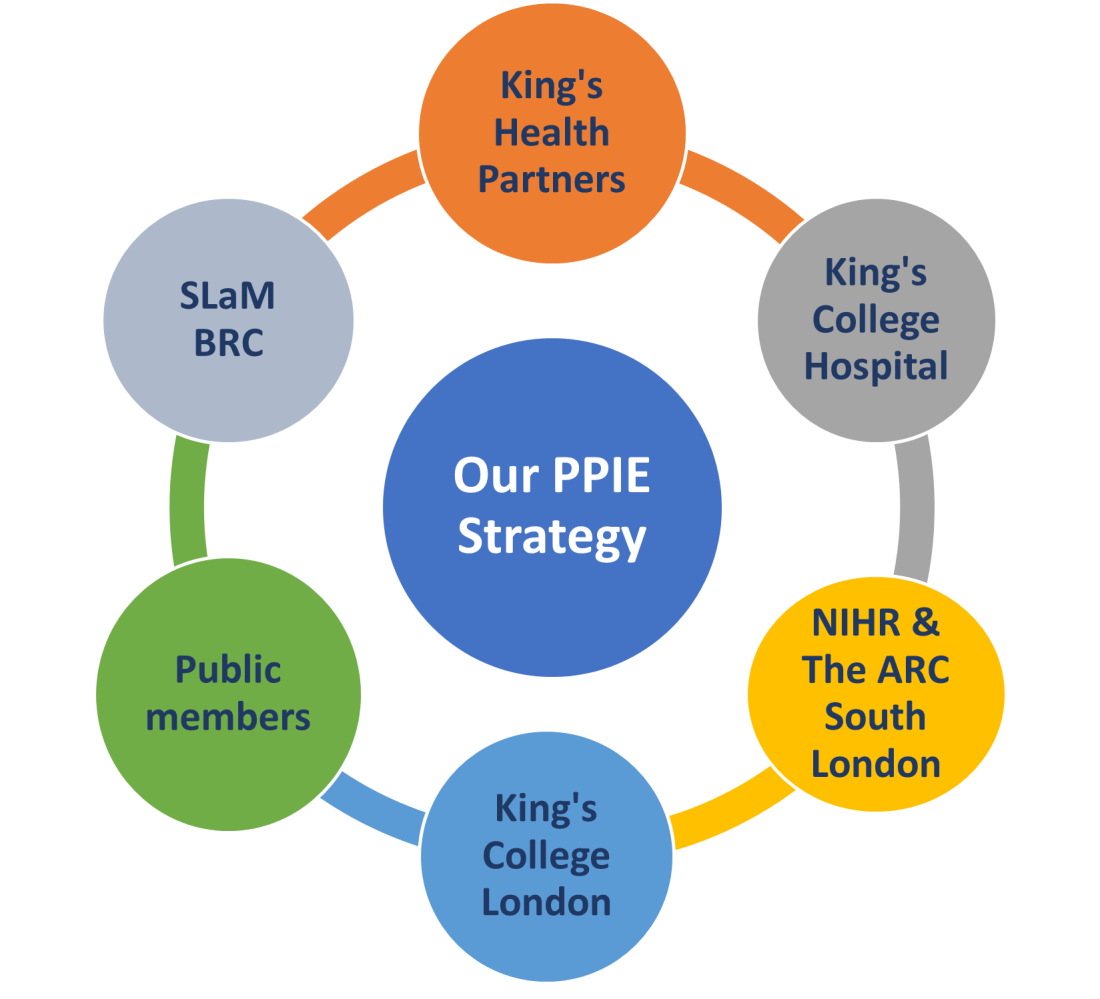
Partners and collaborators that have influenced our strategy
Our ambition and aim for PPIE
Our ambition: to develop a culture that places PPIE at the heart of all aspects of our work.
Our aim: to raise awareness of our research, and to promote meaningful and attractive PPIE opportunities related to our research and work.
Our ambition and aim are built on and in line with the NIHR’s PPIE Strategy, ‘Going the Extra Mile’ [1]. Their strategy outlines the need for the public as partners in all work that is undertaken, and the need for involvement and engagement opportunities to be visible and seized by the public.
Our principles
- Responsive patient and public involvement: we will take ideas onboard, and we will make changes when they are needed
- Respectful patient and public involvement: we will take time to listen to, and learn from, diverse opinions and voices. We will do this with the same level of enthusiasm and interest. We must create an environment where the learning is two-way (between public members and staff members)
- Relationship-centred involvement: we will value everyone and the unique experiences they bring to our work
Our principles were developed drawing on the approaches and behaviours encouraged by the UK Standards for Public Involvement[1]. Whilst all six standards are aspirational, we particularly focused on working together (working in a way that values all contributions) and communication (using clear language for well-timed and relevant communication). See Appendix 1.
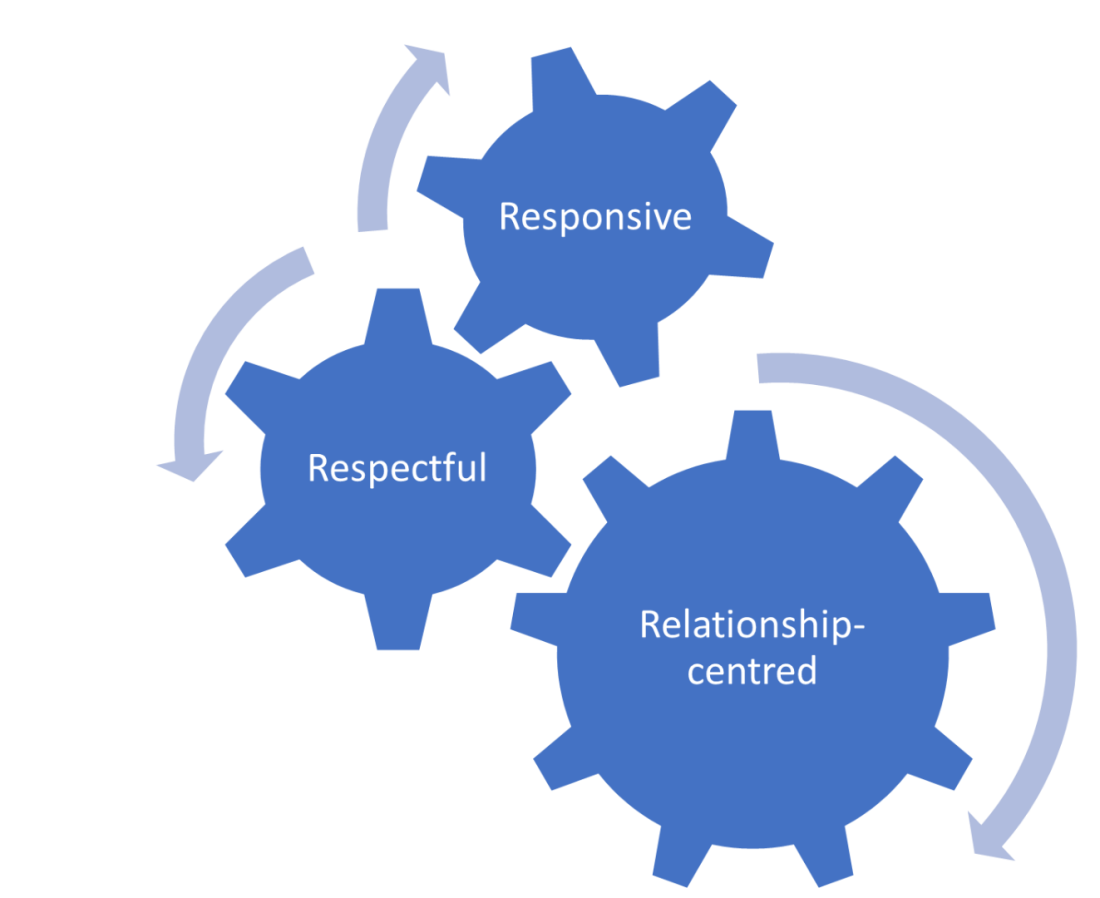
Our principles
Our goals
- To promote the NIHR King’s Clinical Research Facility, our research and work in a way that attracts members of the public (to join our public involvement group, and to engage with relevant events)
- Offer a first-class experience for members of the public who visit the NIHR King’s Clinical Research Facility and are involved in our work
- To engage and educate young people and academic institutions on the work of the NIHR King’s Clinical Research Facility and the importance of PPIE
- Evaluate the impact of public involvement and engagement in our research
Our action plan
1. We plan to promote the CRF, our research, and work in a way that attracts members of the public to join us:
- Ensure ongoing co-production of PPIE communications (website content and social media), in liaison with the CRF Communications Lead, to share information and promote engagement opportunities with a wider population of public members and researchers. We will do this throughout 2026. (Responsible Individuals: PPIE Lead and Comms Lead)
- Create and display PPIE content (e.g., involvement opportunities, upcoming events, awareness days) on CRF TV screens to share opportunities and relevant CRF information. We will do this throughout 2026. (Responsible Individuals: PPIE Lead and Comms Lead)
- Work closely with the Comms Lead to develop impact case studies to publicise the important contributions of the PPIE group. We will do this throughout 2026. (Responsible Individuals: PPIE Lead and Comms Lead)
- Maintain a bi-annual newsletter that participants and public involvement members can sign up to for information about relevant CRF news and upcoming events. (Responsible Individuals: PPIE Lead)
- Identify opportunities and events to promote the work of the CRF, including patient awareness days and public engagement initiatives (e.g., Mental Health Day, Migraine, Diabetes, Clinical Trials Day). We will do this throughout 2026. (Responsible Individuals: PPIE Lead and Comms Lead)
- Identify opportunities to advertise throughout the trust including to KCH, SLaM, and KCL. We will do this throughout 2026. (Responsible Individuals: PPIE Lead and Comms Lead)
2. We plan to offer a first-class experience for participants and public involvement members
- Maintain a Strategy Group composed of public members and CRF staff to oversee the delivery of this strategy and make changes where needed. The group will meet quarterly and be co-chaired by a public member and a CRF staff member. The group will be reviewed every three years. Themed sub-groups (e.g., EDI, advanced therapies) may be established to support specific areas of work. (Responsible Individuals: PPIE Lead and CRF Manager).
- To introduce yearly training needs survey for public members and CRF staff to continually improve everyone’s experience of PPIE. We will do this by the end of 2026. (Responsible Individuals: PPIE Lead and CRF Manager).
- To implement training on PPIE for CRF staff and researchers to be co-delivered with a public member during regular Friday teaching sessions (x2 per year). All staff must attend at least one of the sessions. We will do this by the end of 2026 then biannually. (Responsible Individuals: PPIE Lead and CRF Manager).
- Continue identifying members to join the public involvement group and maintain a secure contact database of all interested parties. This will ensure we have a wide range of stakeholders to extend the reach of our communications and involvement and engagement activities. We will do this throughout 2026. (Responsible Individuals: PPIE Lead and CRF Manager).
- Survey PPI members about their interests (e.g., strategy work, research review, events, social media) and areas of expertise (e.g., cancer, rare diseases). Use this information to maintain a secure database that supports matching members to appropriate PPI opportunities. We will do this by the end of 2026 and then this will be ongoing. (Responsible Individuals: PPIE Lead and CRF Manager).
- Develop ‘dragon’s den’ events where public members can give immediate input on researchers’ work (including ideas for recruitment, dissemination, etc.) This will be ongoing. (Responsible Individuals: PPIE Lead)
- Communicate PPIE opportunities clearly and transparently, setting out allocation processes and expectations for members. This will be ongoing. (Responsible Individuals: PPIE Lead)
- Improve visibility and communication of the PPIE strategy by circulating accessible versions (full, summary, and easy-read) to PPI members and CRF staff, embedding the strategy into induction processes, and working with the CRF Communications Lead to publicise it via appropriate channels. We will do this by mid 2026. (Responsible Individuals: PPIE Lead and Comms Lead)
- Establish a PPIE service for commercial research organisations to deliver high-quality PPI input and expand the range of meaningful PPI opportunities. (Responsible Individuals: PPIE Lead and CRF Manager)
3. Engage and educate young people and academic institutions:
- Continue to work with local schools and offer work experience and/or open days for GCSE and A-level students. This will be ongoing throughout 2026. (Responsible Individuals: PPIE Lead and CRF Manager)
- Establish a programme of school outreach workshops to raise awareness of research and research careers, prioritising local schools and under-represented groups. This will be done by end of 2026, then ongoing. (Responsible Individuals: PPIE Lead and CRF Manager)
4. Evaluate the impact of public involvement and engagement:
- Implement a ‘Data at the Door’ survey for CRF visitors and research participants to capture awareness of the CRF, interest in taking part in research, and understanding of and interest in patient and public involvement. Use the findings to identify gaps in awareness and inform communications and promotional activity. This will be done by end of 2026, then annually. (Responsible Individuals: PPIE Lead and CRF Manager)
- Monitor and reflect on progress with specific public involvement activities and events using evaluation forms, which are co-produced with public members. This will be done annually. (Responsible Individuals: PPIE Lead and CRF Manager)
- Towards the end of the strategy period invite public members to take part in focus groups or interviews to discuss progress made against each goal and their experience of being involved in the strategy group. This will be done by end of 2026. (Responsible Individuals: PPIE Lead and CRF Manager)
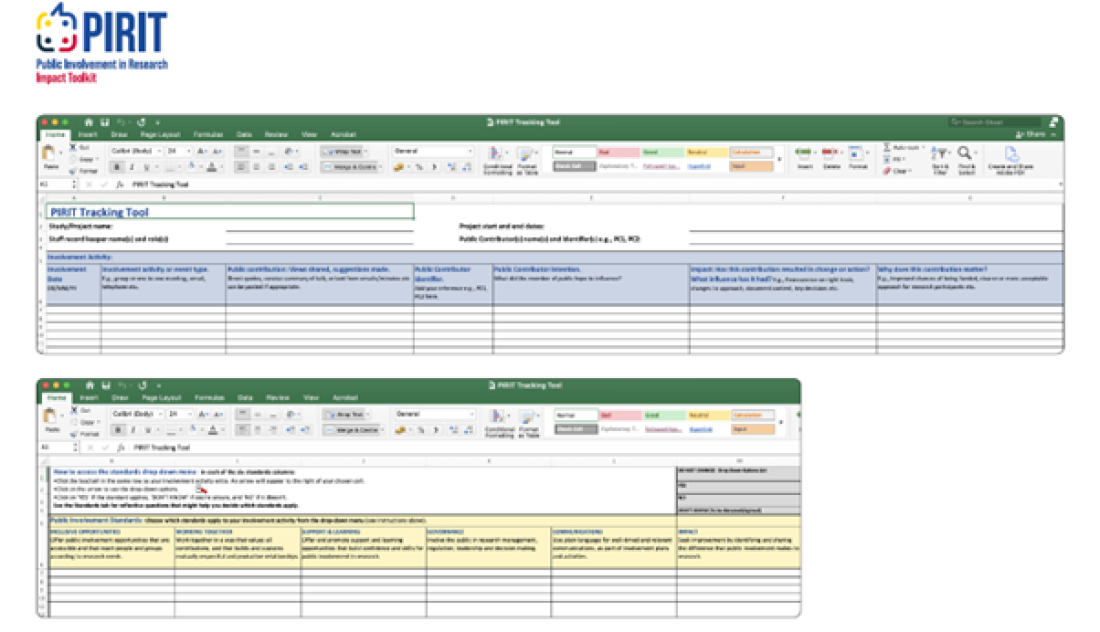
- Use the Public Involvement in Research Impact Toolkit (PIRIT) to record the contributions public members have made and the changes to research and practice as a result. This will be done by end of 2026. (Responsible Individuals: PPIE Lead and CRF Manager)
Resources and infrastructure supporting our strategy
Our strategy development and delivery will be supported by:
- CRF Manager – with overall responsibility for putting this strategy into practice
- PPIE Lead – with responsibility for ensuring effective involvement throughout the CRF’s activities
Our partners and collaborators at King’s College Hospital, King’s College London, South London and Maudsley and its Biomedical Research Centre, the NIHR, and our public members will also provide support and guidance in the PPIE work undertaken and outlined in this strategy.
There are funds to support public involvement activity. Public members will be paid for their time at a rate of up to £27.50 per hour, in line with current NIHR Centre for Engagement and Dissemination benchmarks[1]. Public members’ reasonable travel expenses will also be reimbursed. We want to make sure that there is equality of opportunity, and that payment is not a barrier for any public members who wish to be involved in the work and activities of the NIHR King’s Clinical Research Facility.
Whilst this strategy does not cover other issues related to Equality, Diversity, and Inclusion (EDI) in depth, it is an important aspect of any public involvement work. Alongside offering payment, we will be mindful of individuals’ backgrounds and range of experiences and interests when joining us to ensure as diverse a public involvement group as possible. We will also offer any welcome, induction or training materials in accessible formats (such as large print) as required.
As part of this strategy, the following key structures support the delivery of this plan at the NIHR King’s Clinical Research Facility:
- Strategy Group: A group of public members and CRF staff who meet quarterly to review progress against the strategy and explore how involvement can be strengthened. See Goal 2, action a.
- An active learning series: The PPIE Lead co-delivers training on PPIE with a public member during Friday teaching sessions (x2 per year). All staff are expected to attend at least one session. See Goal 2, action c.
[1] https://www.nihr.ac.uk/documents/payment-guidance-for-researchers-and-professionals/27392
Our governance structures
Our Strategy Group will ensure that public members are integral in the governance of the NIHR King’s Clinical Research Facility, and that their ideas and views are actively sought and taken up by staff.
We will also:
- Add PPIE, and any EDI considerations as a standing agenda item in monthly management board meetings
- 2 public members sit on our governance committee to provide feedback, ideas and report on PPIE activities. These roles rotate every three years to give other public members the opportunity to contribute. We want to make sure that PPIE members feel their presence is valued, and that they are supported to contribute to governance committees in a way that works for everyone.
- 4 PPIE champions are designated among CRF research nurses and clinical research practitioners. They are an additional point of contact and support for public members, encourage good practice, and distribute PPIE documents and guidance. These roles rotate every three years to give other staff the opportunity to take part. PPIE champions may attend PPIE meetings or events in the place of the PPIE Lead if unavailable.
For reporting purposes, the PPIE Lead is accountable to the CRF Manager. The CRF Manager is accountable to the Director of the CRF.
Evaluating our strategy
We will:
- Review progress with our strategy during quarterly meetings with the strategy group.
- Gather evaluation forms and ongoing feedback on public involvement activities and events as part of goal 4.
- Towards the end of 2026, obtain feedback via a survey from CRF staff, researchers, research participants, and public members about progress made against each goal.
- Towards the end of 2026, use the UK Standards as an evaluation tool[1], to identify areas of strength and areas for improvement in our public involvement and engagement.
- Towards the end of 2026, invite public members to take part in focus groups or interviews to discuss progress made against each goal and their experience of being involved in the strategy group. This will inform the next PPIE action plan.
- Use the Public Involvement in Research Impact Toolkit (PIRIT) developed by the Marie Curie Research Centre and the Wales Cancer Research Centre[2], to record the contributions public members have made and the changes to research and practice as a result. See Appendix 2.
[1] Seddon, K., Elliott, J., Johnson, M. et al. Using the United Kingdom standards for public involvement to evaluate the impact of public involvement in a multinational clinical study. Res Involv Engagem 7, 22 (2021). https://doi.org/10.1186/s40900-021-00264-3
[2] https://www.cardiff.ac.uk/marie-curie-research-centre/patient-and-public-involvement/public-involvement-in-research-impact-toolkit-pirit
Acknowledgements
We would like to thank the following individuals who reviewed and improved this strategy:
- Our 3 members of the NIHR King’s CRF PPI strategy refresh group, Al, Clara, and Carrol
- Professor Peter Goadsby, Director, NIHR King’s Clinical Research Facility
Contact
To find out more or to get involved with public involvement and engagement at the NIHR King’s Clinical Research Facility, please email kch-tr.kingscrfppi@nhs.net
Appendix 1. The UK Standards for Public Involvement
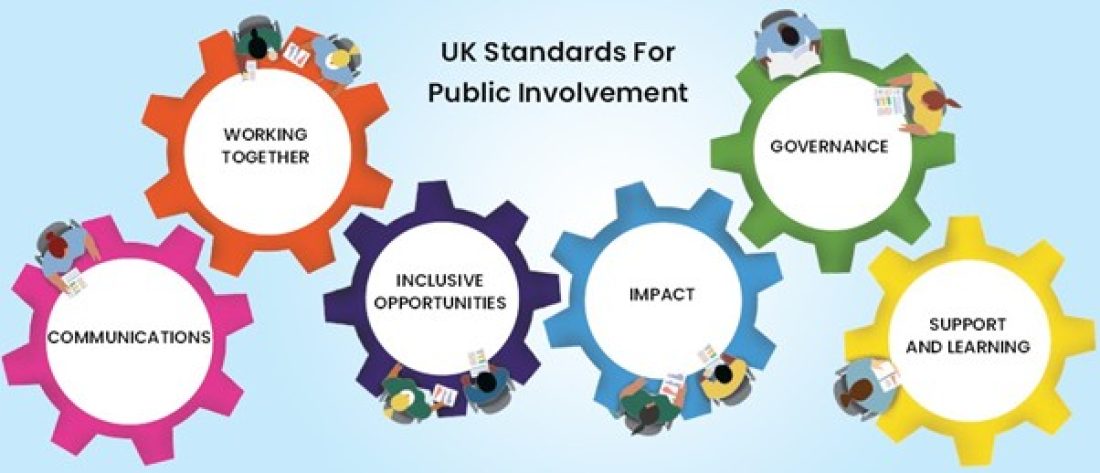
Inclusive opportunities
Offer public involvement opportunities that are accessible and that reach people and groups according to research needs.
Working together
Work together in a way that values all contributions, and that builds and sustains mutually respectful and productive relationships.
Support and learning
Offer and promote support and learning opportunities that build confidence and skills for public involvement in research.
Governance
Involve the public in research management, regulation, leadership and decision making.
Communications
Use plain language for well-timed and relevant communications, as part of involvement plans and activities.
Impact
Seek improvement by identifying and sharing the difference that public involvement makes to research
Appendix 2. Public Involvement in Research Impact Toolkit (PIRIT)
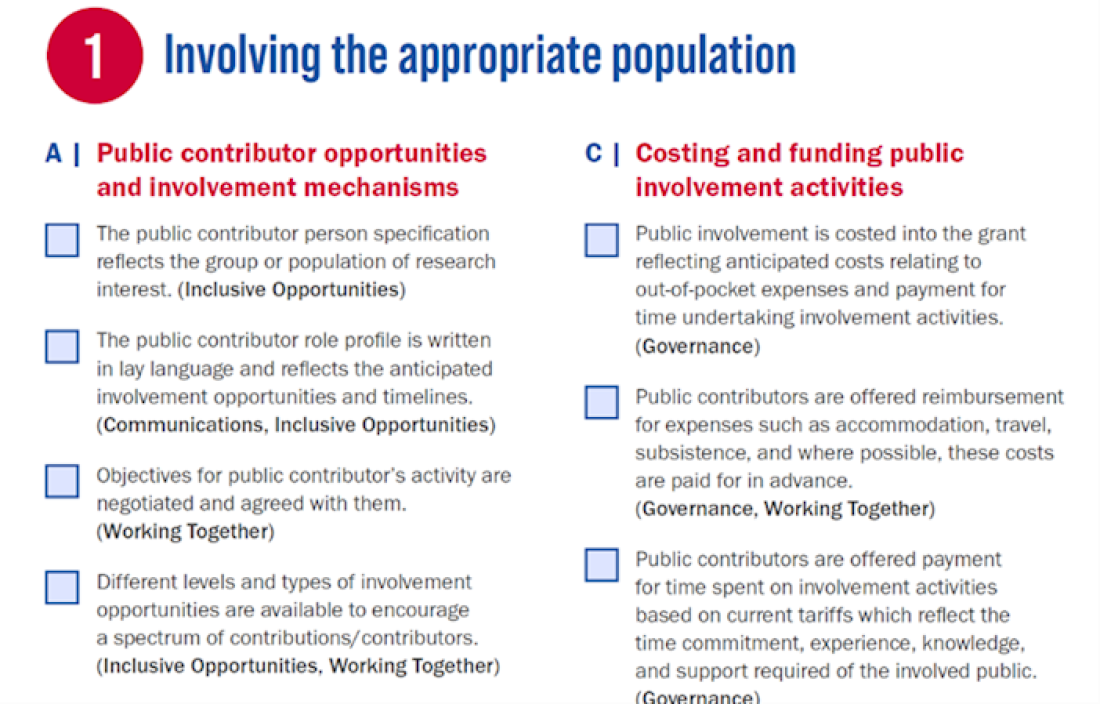
Public Involvement in Research Impact Toolkit (PIRIT) planning tool snapshot:
Public Involvement in Research Impact Toolkit (PIRIT) tracking tool snapshot:
The Public Involvement in Research Impact Toolkit (PIRIT) was developed by the Marie Curie Research Centre and the Wales Cancer Research Centre.