
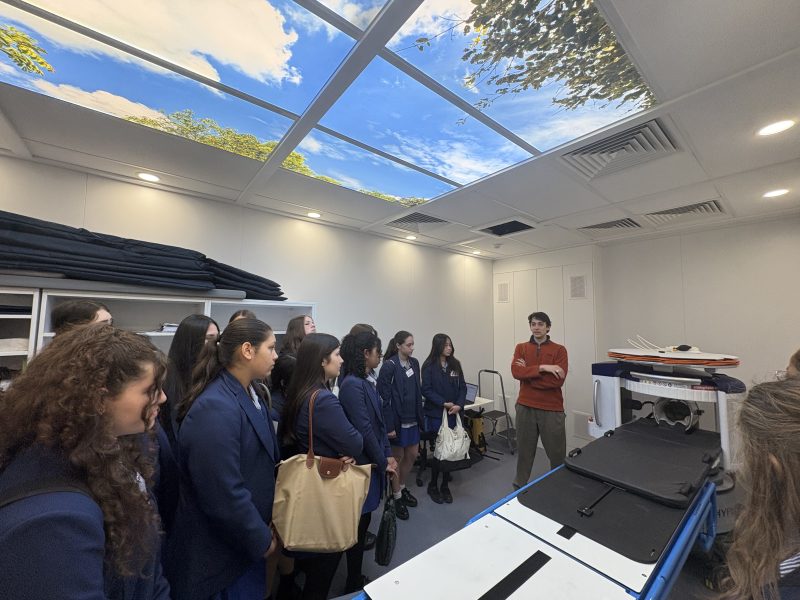
Across April and May, the NIHR King’s Clinical Research Facility hosted two open days for Year 10 and Year 12 students from the Ursuline High School, an all-girls school in Wimbledon.
As an introduction to clinical research, the students were given an overview of what a clinical trial is, how research can help provide new treatments or help people to learn more about certain health conditions, and a brief history of clinical trials.
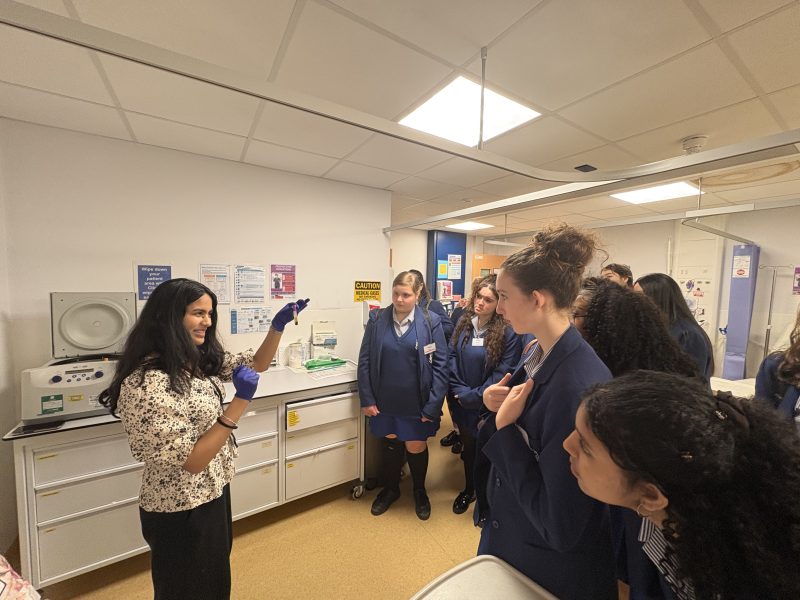
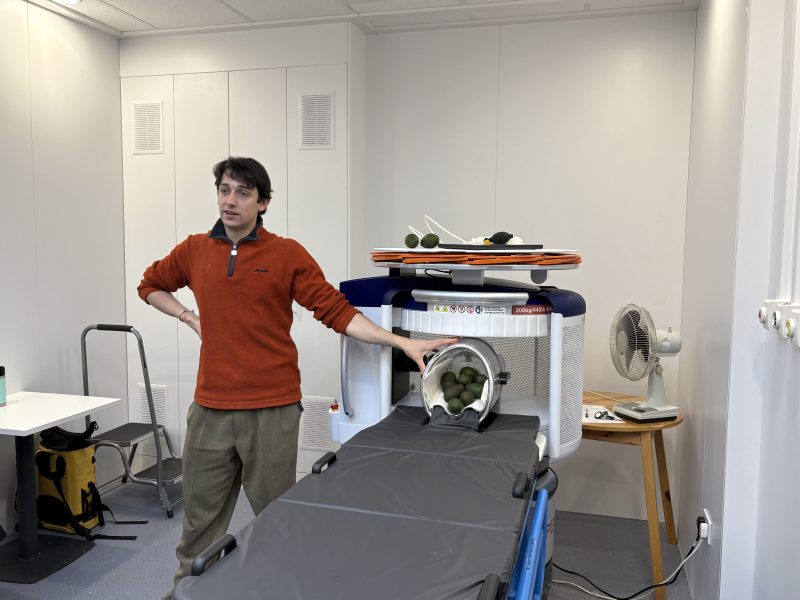
With the open day aiming to encourage more women into Science, Technology, Engineering and Mathematics (STEM) careers, students toured the facilities, met with CRF staff, and learned about the different roles available within research.
Elka Giemza CRF ManagerWomen are under-represented in Science, Technology, Engineering and Mathematics (STEM) careers and so it was important for us to help bridge that gap, inform students about clinical research, and introduce them to the research careers that are available.
Clinical research careers
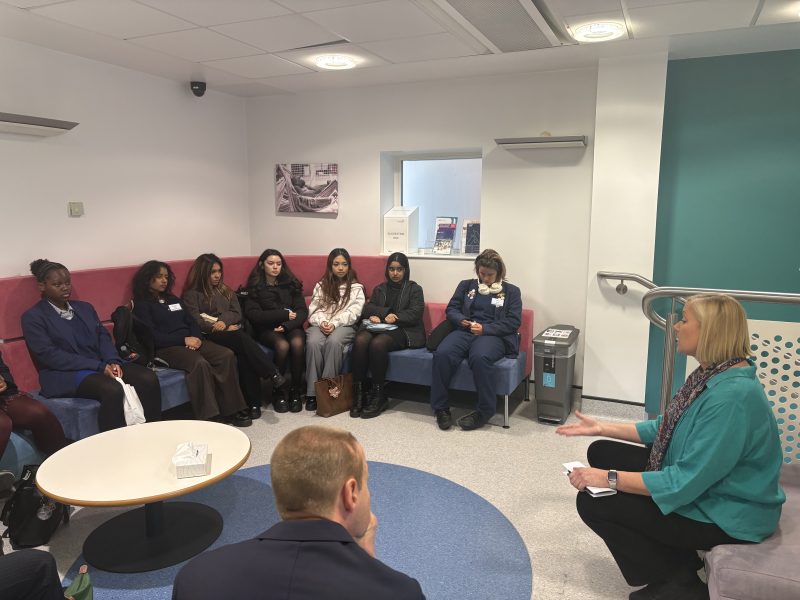
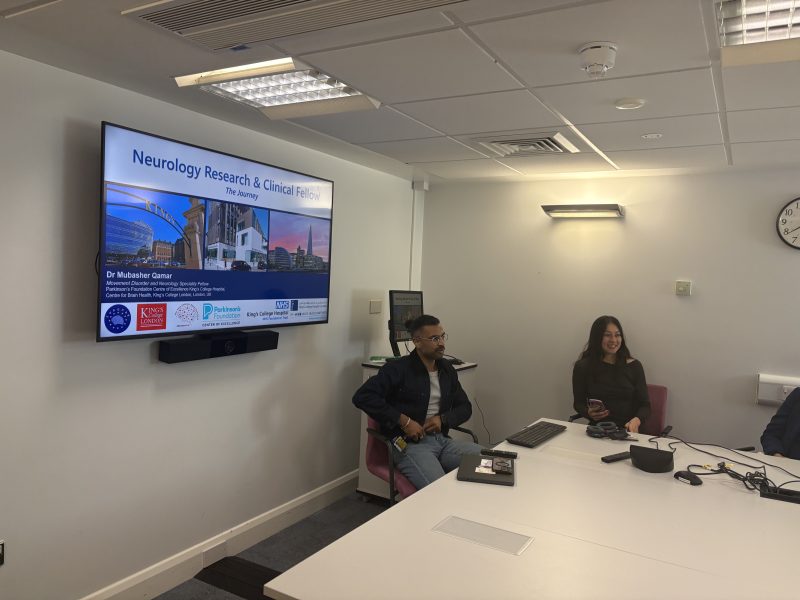
Dr Mubasher Qamar, Movement Disorder and Neurology Specialty Fellow, explained to the students the route he took to becoming a doctor, why he chose medicine, and how he got into clinical research. Dr Qamar also shared the current research he is working on which includes vaccines for Alzheimer’s and Parkinson’s, as well as new drugs for Dementia and Parkinson’s.
The students were also given an insight into the work of a Clinical Trials Manager, and what is involved on a day-to-day basis. This includes recruiting participants (people with the relevant mental health conditions), collecting data and making sure it is stored accurately and safely, and working together with doctors, nurses, therapists and research assistants to make sure the participants are safe.
Catherine Bird, Clinical Trials Manager, also shared about the potential new mental health treatments for depression such as psychedelics.
Cardiology and Basic Life Support
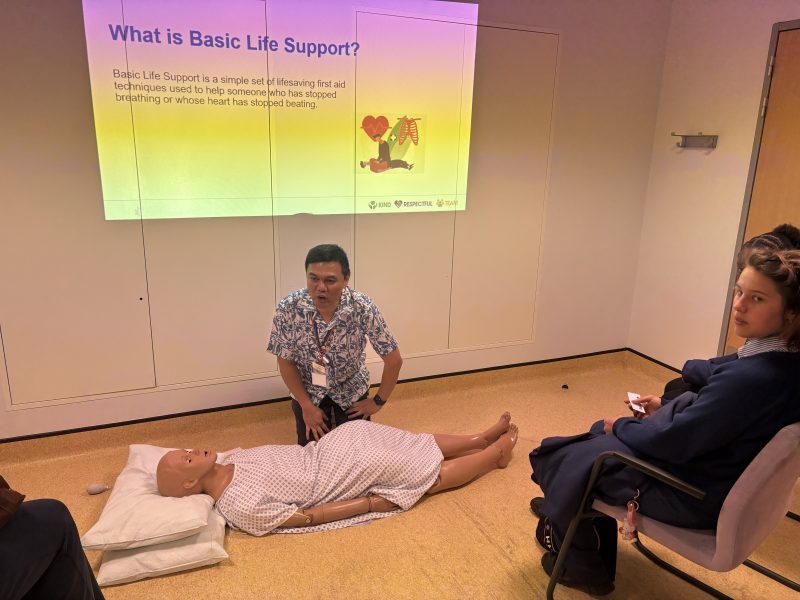
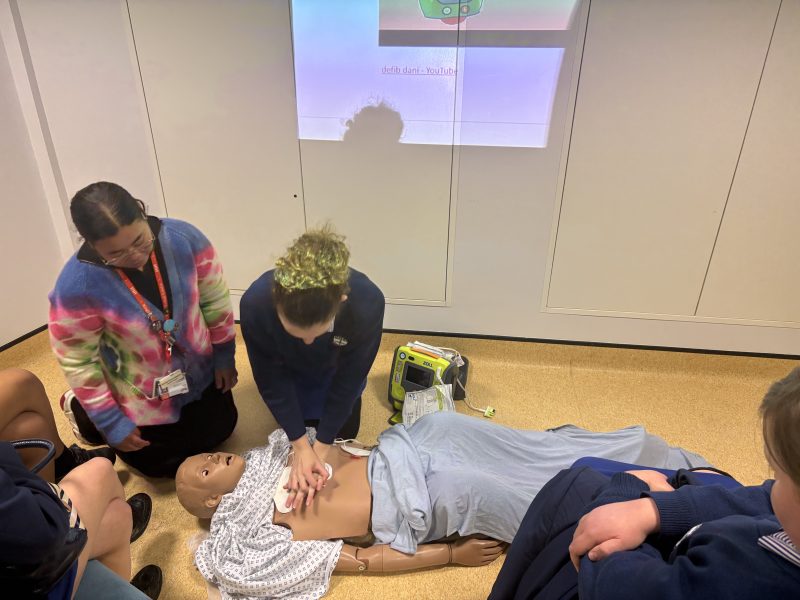
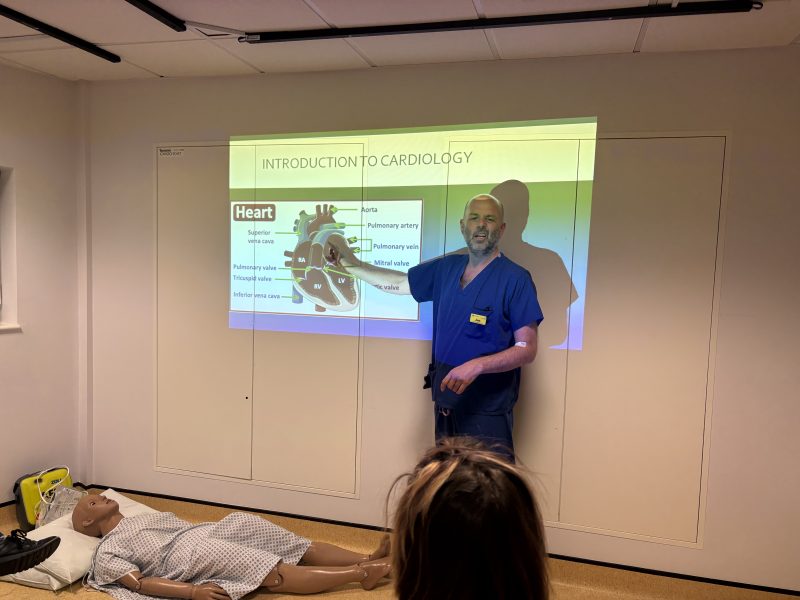
Students were given an ‘Introduction to Cardiology’ talk led by the Lead Cardiology Nurse within research, and were also taught how to perform Basic Life Support, a simple set of lifesaving first aid techniques including CPR (Cardiopulmonary Resuscitation) and how to use an Automated External Defibrillator (AED).
Dani Nebres Lead NurseBasic Life Support is an important skill and can be used to help someone before the emergency services arrives, so it was great to see the students so engaged and enthusiastic to learn how to use a Defibrillator and practice chest compressions.
Working in partnership with academic institutions to educate young people is one of our goals at the NIHR King’s Clinical Research Facility. You can read more in our 2026 PPIE strategy.